

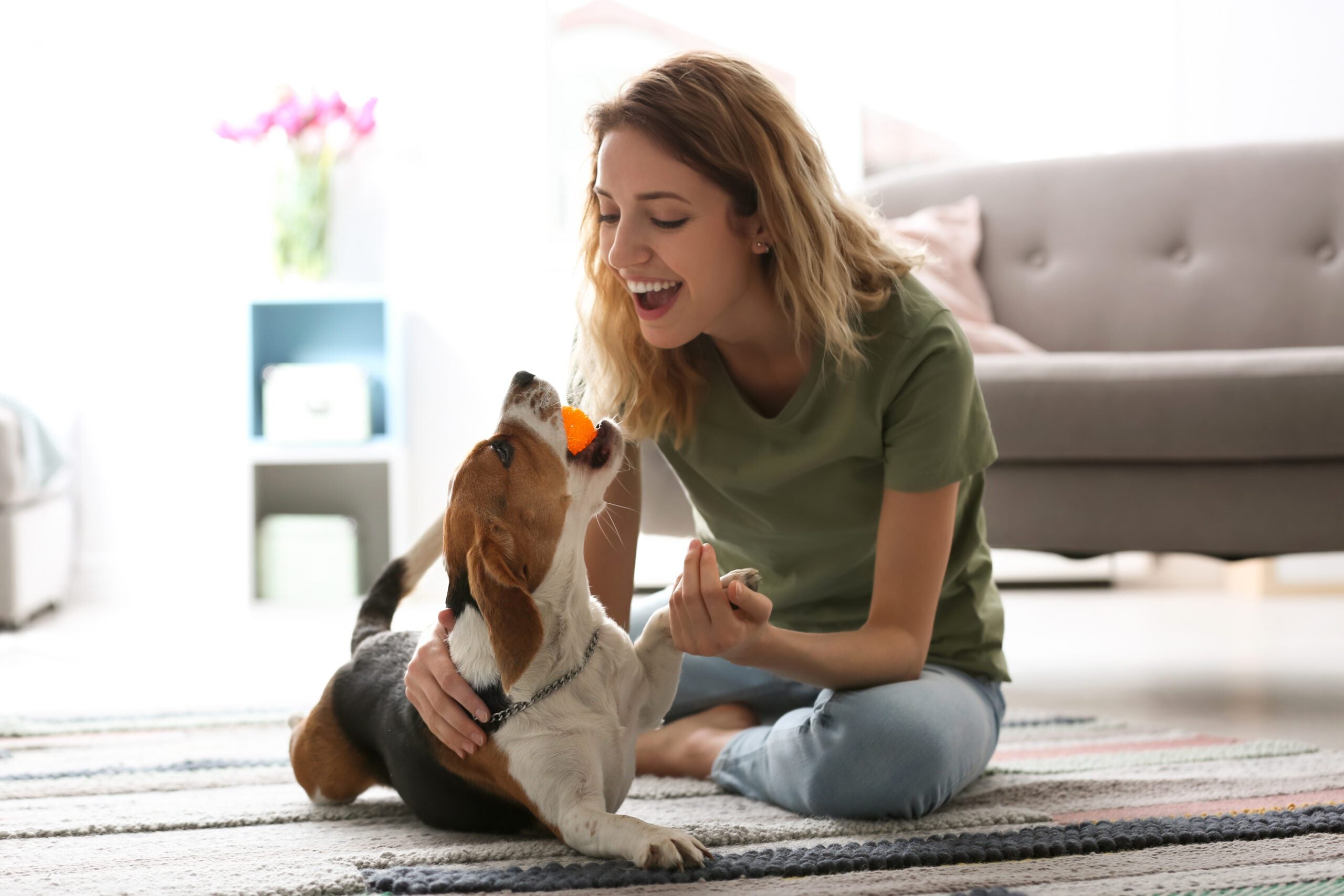
One of the great things about being a pet parent is learning just how perceptive dogs can be. Our pets pay close attention to our body language, which makes it a lovely way to communicate and grow your relationship, fostering a meaningful and loving connection with each other.
Notice Your Dog’s Signals
One of the best ways to build a connection is by learning to listen to your dog.
Every pet communicates through subtle physical cues. When you learn to recognise your dog’s cues, you’ll be better able to respond to their wants and needs.
For example, a calm dog with a relaxed posture might have their mouth open, ears in a natural position and tail wagging. This usually means they’re feeling comfortable and are open to interacting with you or others. While a dog who is avoiding eye contact or turning away while lip licking and with their ears back could be signs, they are worried. You can read more about types of body language here.
These visual cues are valuable for owners as they let them know if their dog might need space or reassurance. Being aware of your pet’s comfort and stress signals can help you better support your dog.
Calmness Builds Trust
Dogs respond to human’s emotional states. When you’re calm and confident, it gives your dog a feeling of safety and stability too.
Taking a deep breath and relaxing your shoulders can help make you calmer and make a big difference to how your dog perceives your mood. Dogs notice their human’s energy, so when you are calm, they will respond with greater ease and trust towards you.
Practice offering treats, such as our Terrier Truffles or Canine Cupcakes, with calm movements and relaxed energy. This helps teach your dog that good things happen when you’re both in a peaceful state, and it helps you to practice remaining calm too.
Approach With Awareness
The way you move toward your dog can also affect how they feel.
Taking a gentle, angled approach can be more comfortable for your pet than walking straight toward them, especially for rescue dogs or puppies who are still building confidence.
Like humans, many dogs appreciate it when you respect their personal space. Let them choose how close they want to be to you and always keep a check on their body language to make sure what they’re comfortable with.
If your dog seems hesitant about your approach, try offering them a treat to the side rather than directly at them. This helps reduces pressure while still creating a positive association with your presence.
Eye Contact Can Build Connection
Eye contact can be another great way to connect. However, remember that for dogs, prolonged eye contact can make them nervous and worried as it can be perceived as a challenge or a threat.
When looking at your dog, avoid direct eye contact and give them a soft, brief, relaxing gaze to help them feel calm and comfortable. If your dog looks away or seems unsure, don’t worry; look slightly off to the side to help reduce any tension.
Let Your Movement Speak
Dogs watch our movements, so when our actions are predictable, they’re easy for them to understand. Relaxed and intentional movements help create a sense of safety and calm.
Use gestures that feel welcoming, such as turning your body slightly or kneeling down at arm’s length rather than leaning over them, which can often feel like a threat.
Practice offering treats using slow, predictable movements. Hold the treat low and allow your dog to approach you rather than reaching over them. This maintains their comfort while rewarding good behaviour.
The more consistent you are with your nonverbal cues, the more confidently your dog can respond to you.
Facial Expressions That Foster Trust
Dogs are remarkably skilled at reading human facial expressions.
A genuine soft smile–not a tense, forced grin–communicates friendliness and approachability. However, be mindful that showing teeth, even in a smile, can be misinterpreted by some dogs as a threat, especially if they’re unfamiliar with you.
Keep your facial muscles relaxed. Furrowed brows, tense jaw muscles, or tight lips can signal stress or anger to your dog. Practice maintaining a soft, pleasant expression even during training or when addressing behavioural issues.
Blinking slowly while looking at your dog can be incredibly calming for them. This “slow blink” is similar to what cats do to show trust, and many dogs respond positively to this gentle gesture.
Create Positive Associations Every Day
Your body language can also help your dog feel good about everyday interactions. When entering a room, stay relaxed and approachable. Let your dog choose to come to you first and give them some praise when they do.
Keep small treats handy during daily interactions so you can reward your dog when they choose to approach you with relaxed body language. This reinforces their positive choice to connect.
When navigating a new environment, your presence provides reassurance to your pet. So, if your dog is nervous, your positive, calm energy can help them feel more at ease. Remember to give them space while remaining calm and supportive, allowing your pet to process their new surroundings and feel empowered to explore at their own pace.
Keep Learning From Each Other
Connection is a two-way street, especially for pet parents. As you become more aware of your own body language, also pay attention to how your dog responds. Remember, every dog is different – what helps one feel comfortable might not work for another.
When you stay present and responsive to your pet, you’ll notice the subtle ways they communicate with you. This mutual understanding will form the foundation of a truly loving and rewarding partnership.
Find more hints and tips on the benefits of being a pet parent on our Ruffingtons blog


